By Ravi Trivedi, Chief Digital Officer, Digital Bharat Collaborative
India stands at a pivotal juncture where artificial intelligence offers unprecedented opportunities to reimagine public health delivery. With 1.4 billion people, chronic physician shortages, and disease burdens spanning tuberculosis to diabetes, the question is not whether AI will transform India’s health system, but how strategically it can be deployed to create equitable, proactive, and resilient public health infrastructure.
From Reactive to Predictive Healthcare
The most transformative potential of AI lies in shifting India’s healthcare model from treating disease to preventing it. AI-driven predictive analytics can analyze vast populations across demographics, lifestyle patterns, clinical history, and environmental data to identify high-risk individuals before symptoms emerge. This capability is particularly crucial for India’s non-communicable disease burden, where early intervention can prevent millions from progressing to severe illness. Generative AI is accelerating this transition by enabling clinical decision support systems that assist physicians in real-time. Healthcare workers in rural clinics can now receive AI-generated prompts and alerts that flag early warning signs of conditions like prediabetes or hypertension progression. A mid-size clinic in Pune that implemented AI-based predictive analytics found increased patient adherence to chronic care plans by 32% while reducing unplanned emergency visits by 45% within 4 months.
Democratizing Specialist Expertise Across Geographies
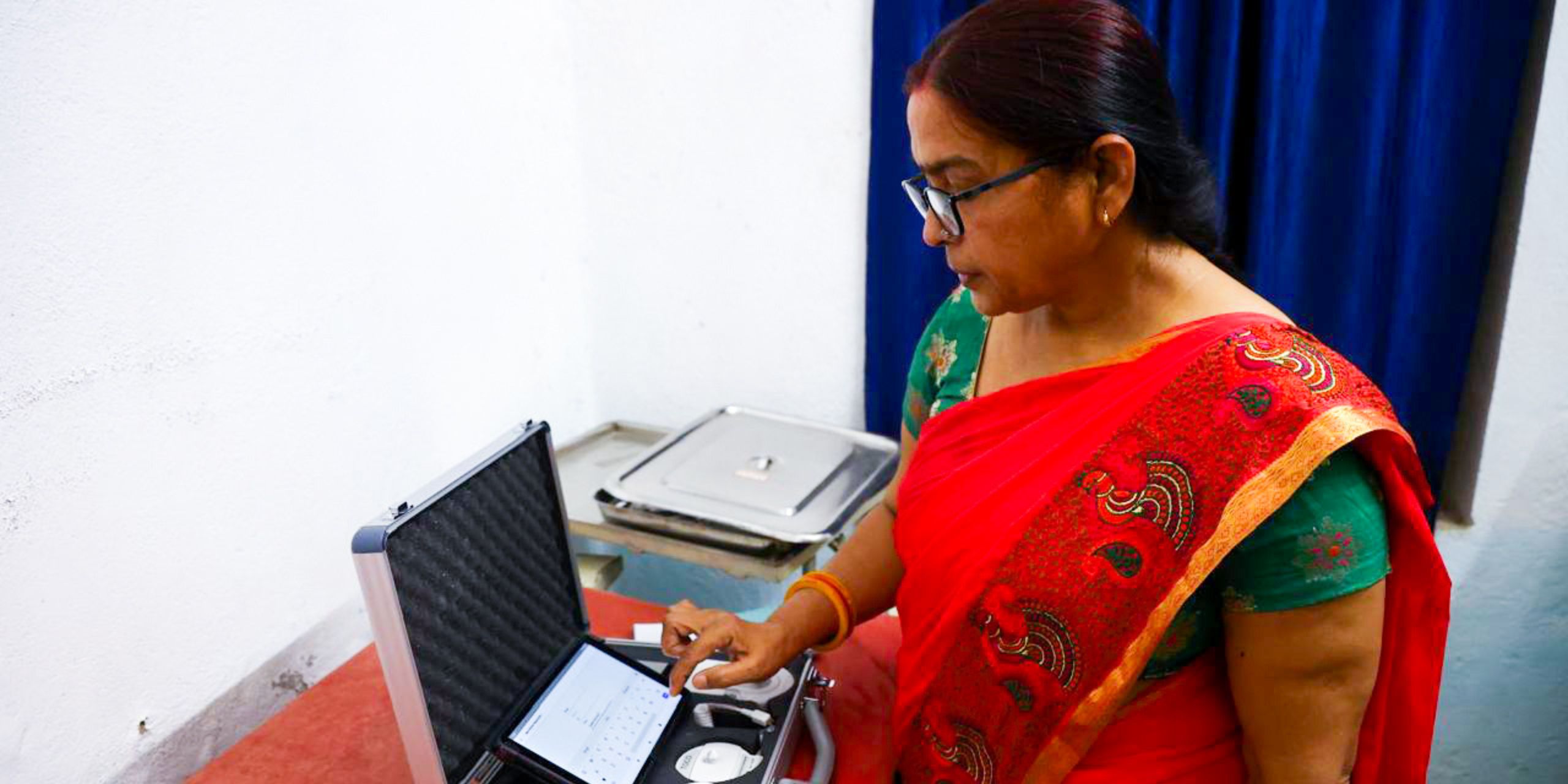
AI-enabled diagnostic tools are making specialist-level medical analysis accessible to India’s 65% rural population. Predictive models for diabetic retinopathy detection, tuberculosis screening, and maternal-child health monitoring are scaling across remote clinics without requiring expensive infrastructure or specialist presence. When integrated with telemedicine platforms like eSanjeevani, these tools enable rural health workers to conduct screenings and transmit results to urban specialists within minutes, fundamentally reshaping the geography of healthcare access.
Building Digital Infrastructure: The AMRIT Example
Open Platforms like AMRIT (Accessible Medical Records via Integrated Technologies), developed by Piramal Foundation, demonstrate how AI-ready digital infrastructure can scale public health delivery across India. AMRIT has reached over two crore beneficiaries across 16 states and 46+ facilities, equipping frontline health workers with comprehensive digital tools. The platform’s embedded Clinical Decision Support System helps healthcare workers improve diagnostic accuracy and treatment plans at the point of care. At the same time, its offline functionality ensures uninterrupted service delivery in connectivity-limited rural areas. Critically, AMRIT’s compliance with global health data standards (SNOMED CT, HL7, LOINC) and its integration with ABHA card generation create an interoperable foundation for AI applications—enabling seamless data flow, predictive analytics, and population health management at scale.
Real-Time Disease Surveillance and Outbreak Prevention
Health Sentinel, developed by Wadhwani AI for India’s National Centre for Disease Control, exemplifies AI’s transformative power in public health surveillance. Since deployment in 2022, this tool has identified over 5,000 potential infectious disease outbreak clusters in real-time by scanning millions of social media posts, online reports, and news sources—work that previously required 98% more manual effort by human epidemiologists. The system detected a 150% increase in published health events compared to pre-AI years, revealing disease signals that traditional surveillance would have missed entirely.
This “human-in-the-loop” approach—where AI identifies patterns and epidemiologists validate findings—balances technological speed with expert judgment, ensuring actionable accuracy rather than algorithmic overreach.
Breaking Data Silos for Integrated Care
The Ayushman Bharat Digital Mission, now encompassing over 797 million digitized health accounts, creates the foundational layer for AI’s transformative potential. Federated learning approaches—where AI models train across decentralized datasets without exposing individual patient information—allow India to improve diagnostic accuracy while safeguarding privacy. This interoperable health data ecosystem enables population-level insights that individual hospitals cannot generate, supporting resource allocation, policy design, and personalized prevention strategies.
Workforce Multiplication and Efficiency
Rather than replacing clinicians, AI augments their capacity. Administrative burden—documentation, prescription filling, appointment scheduling—can be automated, freeing physicians to focus on complex clinical reasoning and patient care. In under-resourced regions, this multiplier effect is transformative: one physician equipped with AI decision support becomes effectively more productive than several without such tools.
The Path Forward
As per a report from IMARC group, India’s healthcare AI market’s projected to grow at a 30% CAGR to $4.1 billion by 2033, reflecting accelerating adoption. However, realizing AI’s full transformative potential requires addressing current implementation barriers: infrastructure gaps, algorithmic bias, data quality concerns, and professional resistance. Strategic priorities include robust IT infrastructure investment, comprehensive clinician training, and governance frameworks ensuring accountability and transparency.
India’s emerging model—blending public digital infrastructure with public-private partnerships, maintaining human expertise in decision-making, and prioritizing equity—offers a template for low- and middle-income countries globally. When implemented thoughtfully, AI doesn’t just improve individual health outcomes; it fundamentally restructures how nations deliver public health at scale, speed, and equity.
About Ravi Trivedi
Ravi brings 25+ years of global experience in entrepreneurship, investing, and product leadership. Post a successful startup exit, he served as an Indian Administrative Fellow and now mentors startups and non-profits, driving AI and innovation for social impact.